
Nowadays, almost everyone starts their online journey with a Google search. Whether you’re looking for a nearby café, a course to learn digital marketing, or just answers to everyday questions, you type in a few words and hit Search.
But have you ever wondered how certain websites show up on the first page while others don’t? That’s where SEO (Search Engine Optimization) comes in—a skill that determines who gets found online and who stays hidden.
SEO (Search Engine Optimization) is the process of optimizing a website to improve its visibility in organic search engine results. When users search for specific keywords—such as “what is SEO”—search engines analyze millions of web pages and display the most relevant and useful ones.
SEO focuses on aligning your website with the rules, ranking factors, and quality standards set by search engines like Google. The goal is not to manipulate rankings but to create valuable content and a strong technical foundation that search engines like google trust.
In simple terms:
- SEO helps search engines understand your content
- SEO helps users find your website
- SEO increases organic (free) traffic
How Search Engines Work
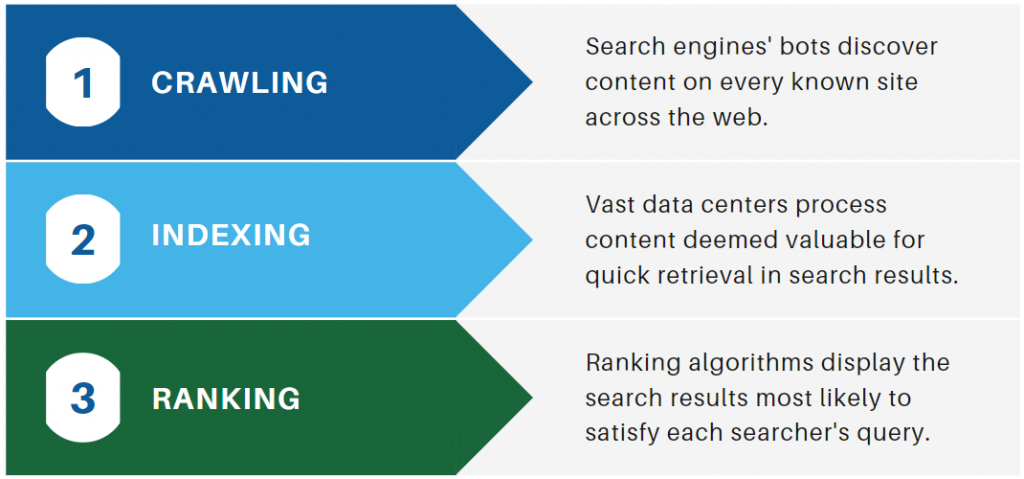
To understand what SEO is, you must understand how search engines function. The process can be broken down into three main steps.
1. Crawling
Search engines use automated programs known as crawlers or spiders. These crawlers scan the web by following links from one page to another. If your website has poor internal linking or technical issues, crawlers may miss important pages.
2. Indexing
After crawling, the search engine stores and organizes the content it finds in a massive database called an index. Pages that are not indexed will never appear in search results.
3. Ranking
When a user enters a search query, the search engine evaluates indexed pages and ranks them based on relevance, quality, authority, and user experience. SEO focuses on improving these factors to achieve higher rankings.
Major Types of SEO
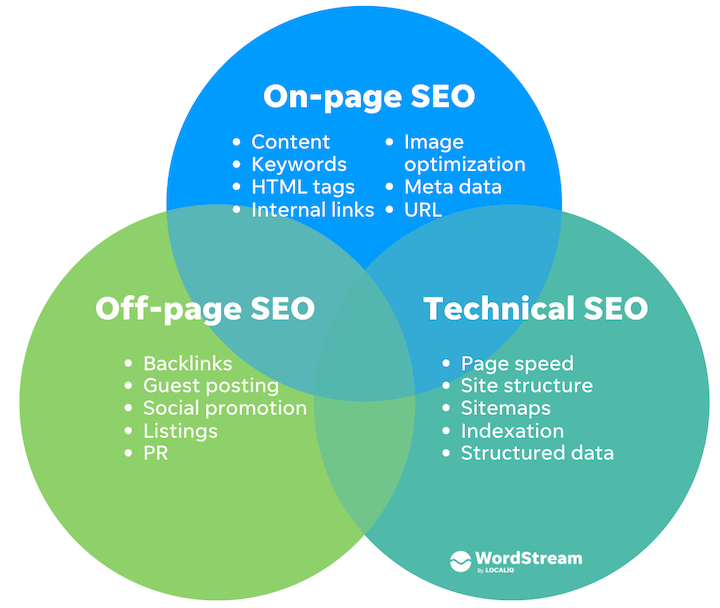
SEO is a broad discipline that includes several specialized areas.
1. On-Page SEO
On-page SEO involves optimizing elements within your website. This includes:
- Keyword usage in titles and headings
- Meta descriptions
- Content quality and structure
- Internal linking
- Image optimization
Good on-page SEO ensures that both users and search engines clearly understand your content.
2. Off-Page SEO
Off-page SEO refers to activities performed outside your website to build authority and trust. The most important factor is backlinks—links from other reputable websites pointing to your content.
Other off-page factors include brand mentions, social sharing, and online reputation.
3. Technical SEO
Technical SEO focuses on the backend structure of your website. It ensures that search engines can crawl, index, and rank your site efficiently. Key elements include:
- Website speed
- Mobile responsiveness
- Secure HTTPS connection
- Clean site architecture
- Structured data
4. Local SEO
Local SEO helps businesses appear in location-based searches such as “near me” queries. It is especially important for physical businesses and service providers targeting specific areas.
Core Components of SEO
1. Keywords
Keywords are the foundation of SEO. They represent what users type into search engines. Effective SEO starts with understanding search intent and choosing keywords that align with user needs.
Targeting a focused keyword like “what is SEO“ allows content to directly answer a common and valuable query.
2. Content
Content is the heart of SEO. High-quality content should be:
- Original and informative
- Easy to read and well-structured
- Focused on solving user problems
- Updated regularly
Search engines prioritize content that demonstrates expertise and usefulness.
3. Backlinks
Backlinks act as trust signals. When authoritative websites link to your content, it tells search engines that your page is valuable and credible. However, quality matters far more than quantity.
4. User Experience (UX)
User experience plays a growing role in SEO. Factors such as page speed, mobile usability, navigation, and readability directly impact rankings. A website that users enjoy using is more likely to rank well.
Why SEO Is Important
SEO offers long-term benefits that few marketing strategies can match.
- Increases organic traffic without ongoing ad spend
- Builds trust and credibility with users
- Delivers high ROI over time
- Supports brand awareness
- Improves website usability
Unlike paid ads, SEO continues to generate traffic even when you stop actively promoting content.
SEO vs Paid Advertising
SEO and paid advertising serve different purposes but often work best together.
SEO focuses on long-term growth and sustainability, while paid ads provide immediate visibility. Once ads stop, traffic disappears—but SEO continues to deliver results.
For most businesses, investing in SEO creates a stable foundation for digital marketing success.
Common SEO Misconceptions
Many beginners misunderstand SEO. Let’s clear up some common myths:
- SEO is a one-time task – SEO requires ongoing optimization
- More keywords mean better rankings – Keyword stuffing harms SEO
- SEO is dead – SEO is evolving, not disappearing
- Only large companies benefit from SEO – Small businesses can compete with smart strategies
How Long Does SEO Take to Show Results?
SEO is a long-term strategy. Results depend on competition, website condition, and consistency.
- Initial improvements: 1–3 months
- Noticeable traffic growth: 3–6 months
- Strong rankings: 6–12 months
Patience and consistency are critical for success.
The Future of SEO
SEO continues to evolve with technology and user behavior. Future trends include:
- AI-powered search results
- Voice search optimization
- Greater focus on search intent
- Experience and trust-based ranking factors
- Helpful, people-first content
Websites that prioritize real value over shortcuts will thrive.
So, what is SEO? SEO is the foundation of online visibility. It connects your content with users who are actively searching for answers. By focusing on quality content, strong technical structure, and user experience, SEO helps build a sustainable digital presence.
SEO is not about gaming search engines—it is about understanding people. When you serve users better than your competitors, search engines reward you with visibility, traffic, and long-term growth.
If you are looking for a digital marketing courses like SEO, social media, and ads.
Please visit https://hashtagdigitalmarketing.in/contact-us/