
If you’ve ever published a blog and wondered why it didn’t appear on Google, you’re not alone. Many websites have great design and useful information but still fail to attract organic traffic. One of the biggest reasons is poor on-page SEO.
On-page SEO is not about tricks or shortcuts. It’s about helping search engines clearly understand what your page is about—and making sure users find it easy to read, navigate, and trust.
In this guide, you’ll learn what on-page SEO is, how it works, and how you can optimize your pages for better visibility and long-term rankings.
What Is On-Page SEO?
On-page SEO refers to optimizing the elements inside your website pages so they rank higher in search engines and deliver a better user experience.
It includes:
- Page content quality
- Keyword usage
- Headings and formatting
- Meta titles and descriptions
- URL structure
- Image optimization
- Internal linking
- Page experience
Unlike off-page SEO (links) and technical SEO (website structure), on-page SEO focuses directly on what users see and read on each page.
When done properly, on-page SEO improves both search visibility and engagement.
How Search Engines Read a Web Page
Search engines don’t see a page like humans do. They analyze:
- Page title and headings
- Main content relevance
- Keyword context
- Internal links
- Image text
- Page speed and usability
Based on these signals, Google decides whether your page deserves to rank for a specific search query.
If your content is unclear, poorly structured, or mismatched with search intent, rankings suffer.
Why On-Page SEO Is Important
From real SEO audits across business websites and educational portals, we often notice that pages fail to rank not because of poor backlinks—but because the content itself is not optimized properly.
Strong on-page SEO helps:
1. Search engines understand your topic clearly
2. Users stay longer and engage more
3. Pages rank for relevant keywords
4. Click-through rates improve
5. Conversions increase
Even small improvements in content structure and clarity can significantly impact traffic.
Core Elements of On-Page SEO
1. High-Quality Content
Content is the foundation of on-page SEO.
Good content should:
- Answer user intent clearly
- Be easy to read and well structured
- Provide genuine value, not filler text
- Use natural language instead of keyword stuffing
Search engines reward helpful, original, and experience-driven content.
2. Keyword Optimization (Natural Placement)
Keywords help search engines understand relevance, but overusing them harms readability.
Best practices:
- Primary keyword in title and first paragraph
- Secondary keywords naturally in subheadings
- Synonyms and related phrases included
- Avoid forced repetition
Focus on meaning, not density.
3. Title Tags and Meta Descriptions
Your title and meta description control how your page appears in search results.
A good title:
- Includes the main keyword
- Is under 60 characters
- Clearly explains the benefit
A good meta description:
- Encourages clicks
- Stays under 160 characters
- Matches search intent
This directly impacts CTR.
4. Headings Structure (H1–H6)
Headings organize your content for readers and search engines.
Use:
- One H1 for the main topic
- H2 for main sections
- H3 for subpoints
Clear structure improves readability and indexing.
5. URL Optimization
Clean URLs help users and search engines.
Best practices:
- Short and descriptive
- Use hyphens
- Avoid unnecessary numbers or symbols
- Include the main keyword
Example:
✅ /on-page-seo-guide
❌ /page?id=12345
6. Image Optimization
Images improve engagement but must be optimized.
Optimize by:
- Compressing file size
- Using descriptive file names
- Adding ALT text
- Avoiding oversized images
This improves load speed and accessibility.
7. Internal Linking
Internal links guide users and distribute page authority.
Benefits:
- Better crawlability
- Longer session duration
- Strong topical relevance
Link related content naturally.
8. User Experience Signals
Google tracks how users interact with your page.
Important signals include
- Time on page
- Bounce rate
- Mobile usability
- Page speed
Good UX supports better rankings.
Common On-Page SEO Mistakes
Avoid these:
- Thin or duplicate content
- Keyword stuffing
- Missing meta tags
- Poor heading hierarchy
- Slow-loading images
- Weak internal linking
Regular content audits prevent ranking loss.
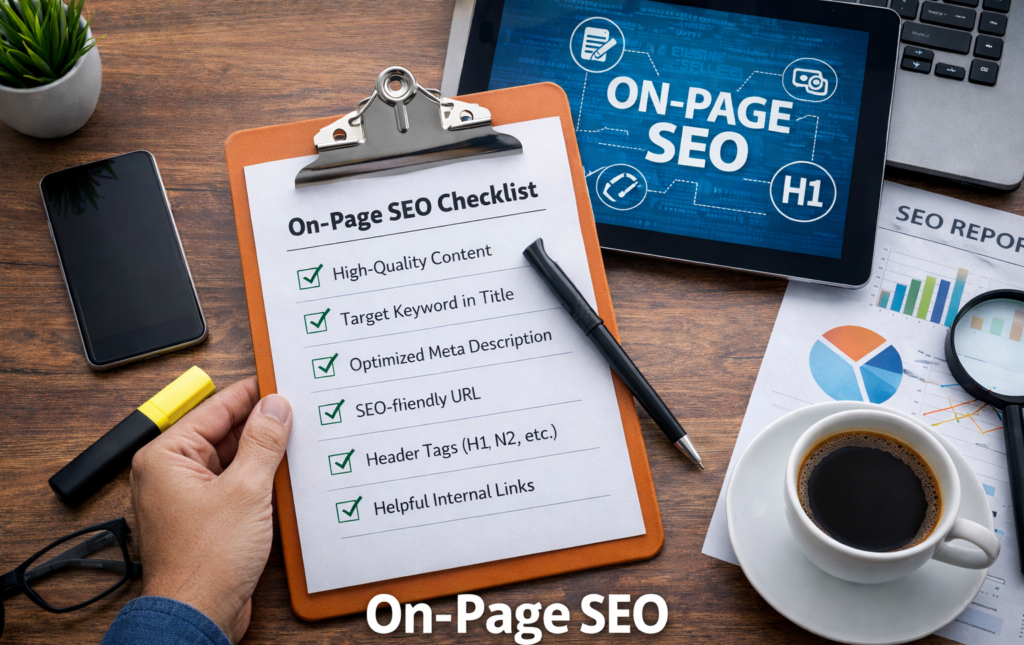
Simple On-Page SEO Checklist
1. Target keyword selected
2. Search intent matched
3. Title optimized
4. Meta description written
5. Proper headings used
6. Images optimized
7. Internal links added
8. Mobile friendly
9. Page speed checked
Summary
On-page SEO is about clarity, value, and usability.
When your content answers real user questions in a simple and structured way, search engines naturally reward it.
Strong on-page SEO builds trust, improves engagement, and drives consistent organic growth.
Author Note
Written by Rohan—Digital Marketing Trainer at Hashtag Digital Marketing Institute in Dehradun