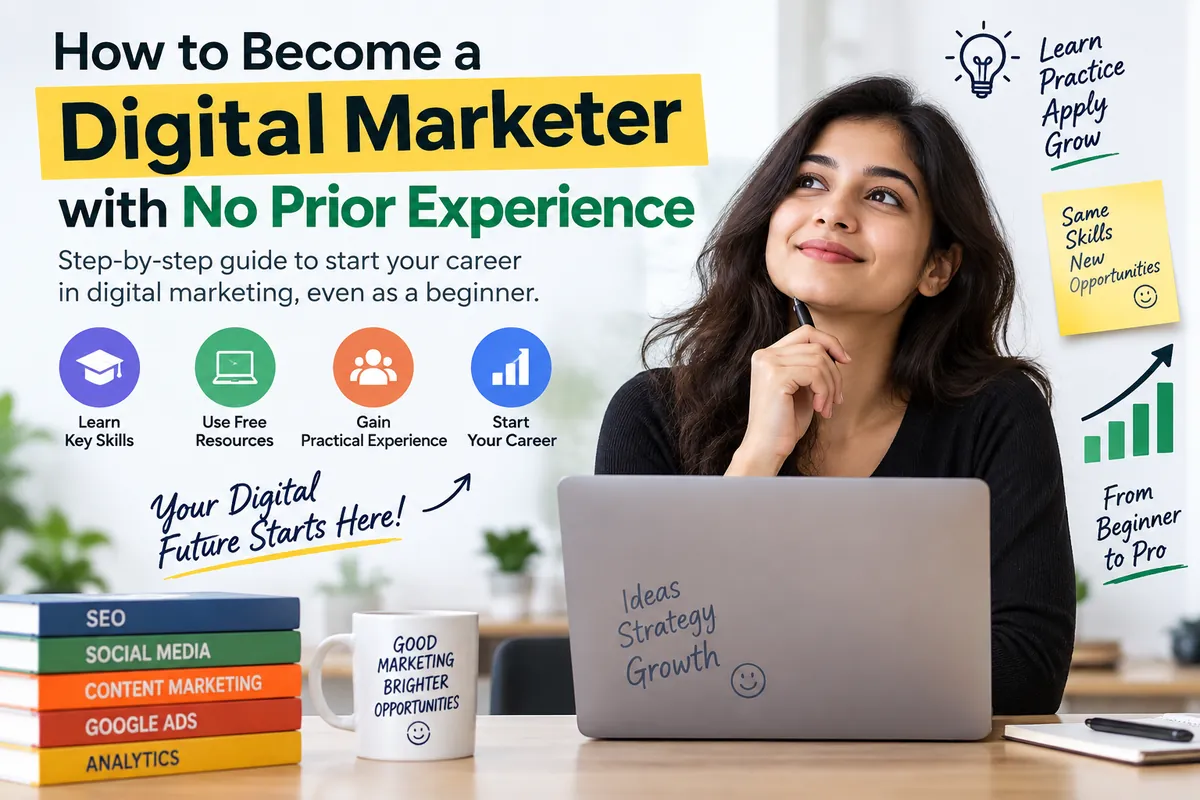
If you run a small business, you have probably faced this dilemma at least once: hire an agency to manage your ads, or learn to do it yourself and save on recurring fees. Digital Marketing for Business Owners has become one of the most searched topics among entrepreneurs who want more control over their marketing budget without depending entirely on external consultants.
The truth is, you do not need to become a full-time marketer to run effective campaigns for your own business. You need a working understanding of a few core skills — enough to plan campaigns, read performance data, and make informed decisions, even if you eventually hire someone to execute the day-to-day work. This knowledge alone can save lakhs in wasted ad spend over time.
In this article, we will walk through the exact skills business owners need to confidently run their own Google Ads, social media marketing, and SEO efforts, along with practical tips on how to learn them without disrupting your existing business operations.
Why Business Owners Are Learning Digital Marketing Themselves
A growing number of entrepreneurs are choosing to upskill instead of fully outsourcing their marketing. There are a few clear reasons behind this shift.
- Agencies often manage multiple clients, so your account may not always get priority attention
- Marketing budgets get wasted when business owners cannot evaluate whether campaigns are actually working
- Understanding the basics helps you communicate better with freelancers or in-house teams
- Local businesses often need quick, low-budget campaigns that large agencies are not structured to handle efficiently
This does not mean agencies are not useful. Many business owners still outsource execution once they scale, but they run their own campaigns in the early stages to understand what actually drives results before spending on outside help.
Core Skill 1: Understanding Search Engine Optimisation Basics
SEO is one of the most cost-effective long-term strategies for any business, yet it is often the most misunderstood.
As a business owner, you do not need to become a technical SEO expert. What matters is understanding:
- How keyword research works and which search terms your customers actually use
- The difference between on-page SEO (content, titles, meta descriptions) and off-page SEO (backlinks, citations)
- Why Google Business Profile optimisation matters for local visibility
- How page speed and mobile-friendliness affect rankings
For example, a local bakery owner who understands basic SEO can optimise their Google Business Profile with accurate categories, photos, and customer reviews, often generating more footfall than a poorly targeted paid campaign.
Core Skill 2: Running Google Ads Without Wasting Budget
Google Ads is one of the fastest ways to get visibility, but it is also where most beginners lose money due to poor targeting.
Business owners should understand:
- The difference between Search, Display, and Shopping campaigns
- How keyword match types (broad, phrase, exact) affect who sees your ads
- Negative keywords, which prevent your budget from being wasted on irrelevant searches
- Basic bid strategies and daily budget caps
A common mistake among new advertisers is running broad match campaigns without negative keywords, which often shows ads to users who were never going to convert. Learning to set up even a simple, well-targeted campaign can significantly reduce cost per lead.
Many business owners find it easier to grasp these concepts through a structured digital marketing course in Dehradun, where they can practice on live campaigns instead of relying only on YouTube tutorials that rarely cover real budget management.
Core Skill 3: Social Media Marketing for Brand Visibility
Social media marketing is often the starting point for most small businesses, since platforms like Instagram and Facebook allow low-cost entry into digital advertising.
To run effective social media campaigns yourself, focus on:
- Understanding your target audience’s demographics and interests
- Creating a consistent content calendar instead of posting randomly
- Learning basic ad creation on Meta Ads Manager, including audience targeting and budget allocation
- Tracking engagement metrics like reach, click-through rate, and conversions, not just likes
It is worth noting that social media success is rarely instant. Businesses that see consistent results usually post regularly over several months while testing different content formats, rather than expecting overnight virality.
Core Skill 4: Reading Analytics and Making Data-Driven Decisions
This is arguably the most important skill, and the one most business owners skip.
Running ads without checking analytics is like driving with your eyes closed. At a minimum, business owners should know how to:
- Read Google Analytics reports to understand website traffic sources
- Track conversions, not just clicks, to measure real return on investment
- Compare cost per acquisition across different campaigns
- Identify which channels (search, social, email) are actually driving sales
Many entrepreneurs who complete a digital marketing internship or hands-on training programme say this analytical thinking is what separates guesswork from strategy — it allows you to stop spending on campaigns that look good on paper but do not convert.
Core Skill 5: Basic Content and Email Marketing
Paid ads work best when supported by strong organic content and direct communication with existing customers.
- Learn to write simple, benefit-focused ad copy instead of generic promotional lines
- Build an email list from day one, even if it starts small
- Use email marketing to nurture leads who are not ready to buy immediately
- Repurpose content across platforms to save time without sacrificing consistency
A furniture business, for instance, can use email marketing to remind past visitors about new arrivals or seasonal discounts, often at a fraction of the cost of running fresh ad campaigns every time.
How Much Time Should You Invest in Learning This?
You do not need months of theoretical study to start. Most business owners can build working knowledge of core platforms within four to eight weeks if they focus on practical application rather than passive learning.
A structured approach works best:
- Spend the first two weeks understanding platform basics (Google Ads, Meta Ads Manager, Analytics)
- Run a small test campaign with a limited budget to apply what you learn
- Review performance weekly and adjust targeting or creatives based on data
- Gradually scale budget once you see consistent, positive results
Business owners who take this structured route, often through a short-term digital marketing course, tend to avoid the expensive trial-and-error phase that many self-taught marketers go through.
Should You Learn Everything or Hire Help Eventually?
Learning the fundamentals does not mean you need to run every campaign forever. Many successful business owners follow a hybrid approach:
- Learn the basics to confidently plan and evaluate campaigns
- Run ads independently during the early growth phase to control costs
- Hire a freelancer or agency once the business scales and time becomes limited
- Continue overseeing strategy and reviewing reports even after outsourcing execution
This way, you remain in control of your marketing decisions, regardless of who is handling the day-to-day execution.
Frequently Asked Questions
Do business owners really need to learn digital marketing themselves? Not entirely, but a working understanding helps you make better budget decisions, evaluate agency performance, and avoid wasted ad spend, especially in the early stages of a business.
Which digital marketing skill should a business owner learn first? Google Ads and basic analytics are usually the most practical starting points, since they directly impact how effectively your budget is being spent.
How much budget is needed to start running ads for a small business? There is no fixed number, but many small businesses start testing with a modest monthly budget and scale gradually based on performance data rather than committing large amounts upfront.
Can a non-technical business owner learn digital marketing easily? Yes. Most core concepts, like keyword targeting, audience selection, and reading basic reports, do not require a technical background. A structured, hands-on course makes the learning curve much shorter.
Is it better to hire an agency or learn digital marketing as a business owner? It depends on your budget and time availability. Many entrepreneurs learn the basics first to understand what results to expect, then hire help once the business grows and requires more advanced execution.
How long does it take to see results from self-run digital marketing campaigns? Paid ads can show initial results within days, while SEO and organic social media growth typically take a few months of consistent effort to show measurable impact.
Final Thoughts
Digital Marketing for Business Owners is no longer optional in a market where most customers discover and evaluate businesses online before making a purchase decision. You do not need to master every skill, but understanding the fundamentals of SEO, paid ads, social media, and analytics puts you in a far stronger position to grow your business efficiently and avoid unnecessary marketing expenses.
Ready to take control of your business’s online growth? Join the best digital marketing course in Dehradun at Hashtag Digital Marketing Academy and learn practical, hands-on skills designed specifically for entrepreneurs and business owners.
Ready to build real, income-ready digital marketing skills?
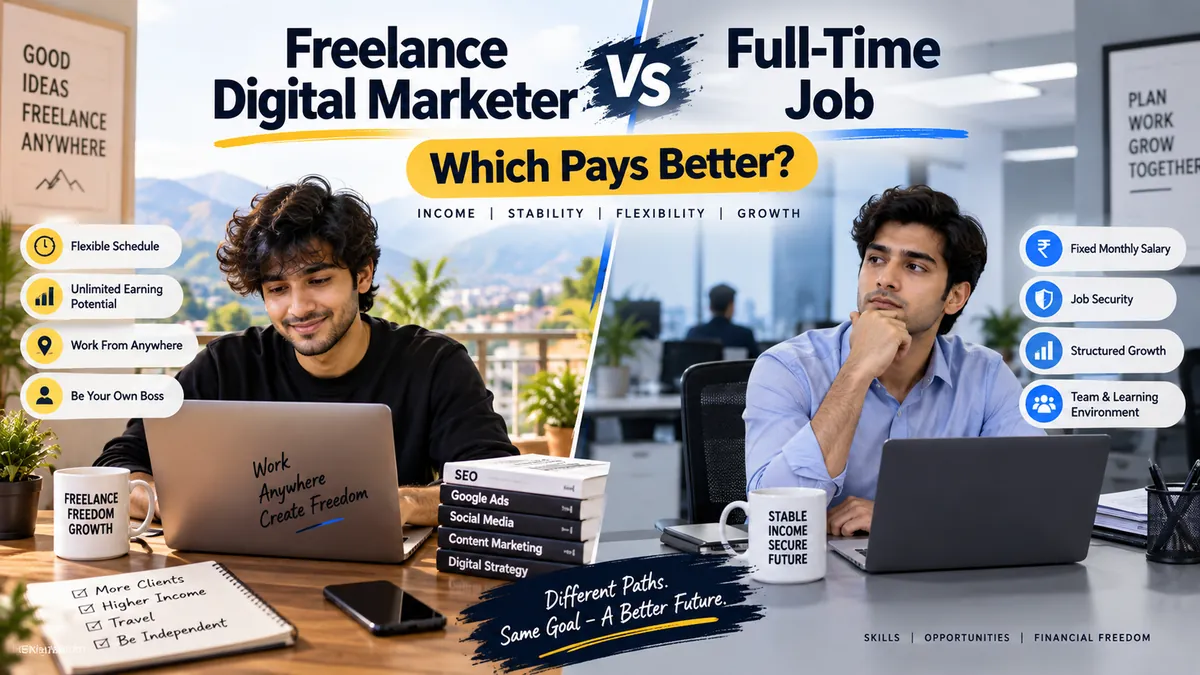
Join the best digital marketing course in Dehradun at Hashtag Digital Marketing Academy and take the first step toward a successful career — whether you choose freelancing or a full-time job.