
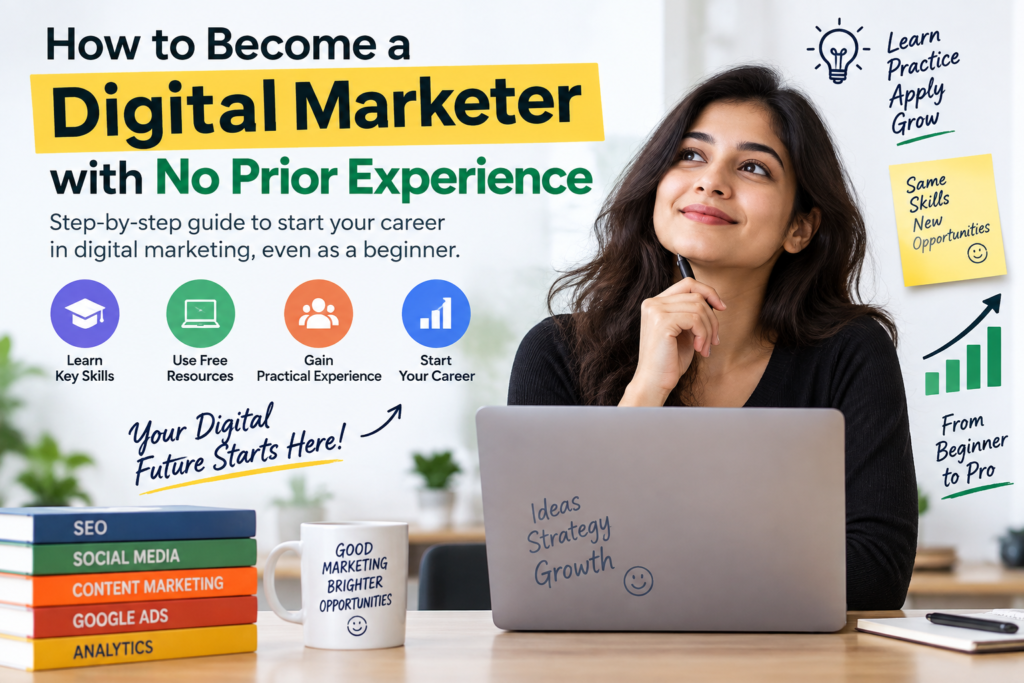
Every expert marketer running six-figure ad campaigns today once sat exactly where you are now: curious, a little overwhelmed, and unsure where to start. The good news is that digital marketing is one of the few high-paying career fields where a degree is optional and skill is everything. Recruiters care far more about what you can do than what your college transcript says.
If you have been wondering how to become a digital marketer with no prior experience, you are not alone. Thousands of students, working professionals, homemakers, and small business owners switch into this field every year, often starting with nothing more than a smartphone and a willingness to learn. The barrier to entry is low, but the path does require structure.
This guide breaks down exactly what digital marketing involves, which skills actually matter to employers, and the realistic steps you can take this month to start building a career, even if you have zero background in marketing, business, or technology.
What Does a Digital Marketer Actually Do?
Digital marketing is the practice of promoting products, services, or brands through online channels such as search engines, social media, email, and paid advertising. A digital marketer’s day-to-day work can include:
- Running and optimising paid ad campaigns on Google or Meta
- Writing content that ranks on search engines
- Managing social media pages and engagement
- Analysing website traffic and conversion data
- Building email campaigns that nurture leads into customers
Unlike traditional marketing roles that often demand years of agency experience, digital marketing is measurable and skill-based. If you can show real results, even from a personal project, employers take notice.
Is Digital Marketing a Good Career Choice Right Now?
Businesses of every size, from local shops to large enterprises, now depend on online visibility to survive. This has created consistent demand for people who understand SEO, social media marketing, Google Ads, and content strategy. A few reasons this field remains a smart choice for beginners:
- Low entry barrier compared to fields like finance or engineering
- Flexible career paths, including freelancing, agency jobs, or in-house roles
- Skills apply across industries, from healthcare to ecommerce
- Continuous learning keeps the work relevant to modern search and AI-driven trends
That said, it is not an overnight transformation. Building genuine competence takes focused effort over a few months, not a weekend.
Step-by-Step: How to Start a Career in Digital Marketing With Zero Experience
Step 1: Learn the Fundamentals First
Before touching any tool, understand the core concepts: how search engines rank content, how paid ads are auctioned, how social algorithms decide what to show, and how customer journeys work. Free resources like Google’s Skillshop and HubSpot Academy are useful starting points, but they only cover theory.
For structured learning with practical exposure, many beginners in Uttarakhand choose a digital marketing course in Dehradun that combines live projects with mentorship, since self-study alone often leaves gaps in real campaign experience.
Step 2: Pick One Specialisation to Start
Trying to master every channel at once leads to shallow knowledge. Instead, choose one area to go deep into first:
- Search Engine Optimisation (SEO) if you enjoy research and writing
- Paid advertising (Google Ads, Meta Ads) if you like data and testing
- Social media marketing if you are comfortable with content creation
- Email marketing and automation if you prefer structured, process-driven work
Once you are confident in one area, expanding into others becomes far easier.
Step 3: Build a Portfolio Before You Have a Job
This is the step most beginners skip, and it is the one that matters most. You do not need a client to build proof of skill.
- Start a niche blog or Instagram page and grow it using organic strategies
- Run a small paid ad campaign with a modest budget of a few hundred rupees
- Volunteer to manage social media for a local shop, NGO, or family business
- Document your process and results in a simple case study format
Recruiters routinely say they would rather see one well-documented project than a resume full of unverifiable claims.
Step 4: Get Certified to Validate Your Learning
Certifications alone will not get you hired, but they signal commitment and fill knowledge gaps. Consider:
- Google Ads and Google Analytics certifications
- Meta Blueprint certification
- HubSpot Content Marketing certification
- A recognised digital marketing certification course that includes hands-on assessments
Step 5: Apply for Internships, Not Just Jobs
Internships are the fastest bridge between learning and earning. Even unpaid or short-term internships give you real client exposure, something no course video can replicate. Many training providers, including practical digital marketing institutes, place students directly into internship roles as part of the course structure, which shortens the time between learning and your first paycheck.
Step 6: Network With People Already in the Industry
Join LinkedIn groups, attend local marketing meetups, and engage genuinely with professionals in the field. A large percentage of entry-level marketing roles are filled through referrals rather than public job postings, so visibility matters as much as skill.
Skills You Need to Become a Digital Marketer
Beyond channel-specific knowledge, employers consistently look for:
- Analytical thinking to interpret campaign data and adjust strategy
- Basic copywriting to write ad copy, captions, and landing page content
- Comfort with tools like Google Analytics, Canva, and Meta Ads Manager
- Adaptability, since algorithms and platform rules change frequently
- Communication skills to explain results to clients or managers clearly
None of these require a technical background. Most are developed through consistent practice over three to six months.
How Long Does It Take to Learn Digital Marketing?
There is no fixed timeline, but a realistic benchmark looks like this:
- One to two months to understand core concepts across channels
- Two to four months to gain hands-on practice through personal or volunteer projects
- Four to six months to reach a level where you can confidently apply for entry-level roles
Structured programs tend to compress this timeline because they combine theory, tools, and mentorship in one place rather than leaving you to piece it together from scattered sources.
Common Mistakes Beginners Make
- Consuming endless tutorials without applying anything practically
- Trying to learn every skill simultaneously instead of specialising first
- Ignoring analytics and focusing only on creative output
- Underpricing freelance work out of a lack of confidence
- Skipping certifications that would otherwise strengthen a resume
Avoiding these mistakes alone can shave weeks off your learning curve.
How to Get Your First Digital Marketing Job
Once you have a portfolio, a specialisation, and basic certifications, focus your job search on:
- Startups and small agencies that hire for potential over pedigree
- Freelance platforms to build a client base while job hunting
- Internship-to-hire programs offered by training institutes
- Direct outreach to local businesses that lack a marketing presence
Many learners find that enrolling in a well-structured digital marketing course does more than teach skills. It also provides placement support, live projects, and a network of hiring partners that significantly shortens the job search.
Frequently Asked Questions
Can I become a digital marketer without a degree? Yes. Digital marketing is a skill-based field, and most employers prioritise practical ability, portfolio work, and certifications over formal educational qualifications.
How much can a beginner earn in digital marketing? Entry-level salaries vary by city and role, but freshers with a solid portfolio and certifications typically earn competitively compared to other entry-level roles, with strong growth potential within two to three years.
Is digital marketing hard to learn for beginners? The concepts are approachable for most learners. The real challenge is consistency, since tools and algorithms change often and require ongoing practice rather than one-time learning.
Do I need coding skills to become a digital marketer? No. Coding is not required for most digital marketing roles. Basic familiarity with website platforms like WordPress can help but is not mandatory to get started.
What is the fastest way to gain digital marketing experience? Running your own small projects, such as a blog, Instagram page, or a mock ad campaign, combined with an internship, is the fastest way to build credible, demonstrable experience.
Should I take a course or learn digital marketing for free online? Free resources work well for basic awareness, but a structured course with live projects, mentorship, and certification generally prepares beginners for real jobs faster and more reliably.
Ready to Start Your Digital Marketing Career?
Reading about digital marketing only gets you so far. The fastest way to move from curiosity to a real career is structured, hands-on training with mentors who have worked on live campaigns. If you are serious about switching into this field, explore the practical digital marketing courses at Hashtag Digital Marketing Academy in Dehradun and take your first step toward a skill-based career that keeps paying off.